

The morning inbox
Open your email and half of it is the same few questions. Where is my order? Can we move the call? Can you send that file again? None of these replies is hard to write. They are just tiring, because there are so many of them.
This is the easiest job to hand over. AI writes a first draft, you read it, change a word or two and press send. The reading part matters. It sometimes gets a name or a date wrong, and a wrong date in a message to a client costs more than the five minutes you saved.
The calendar that argues with you
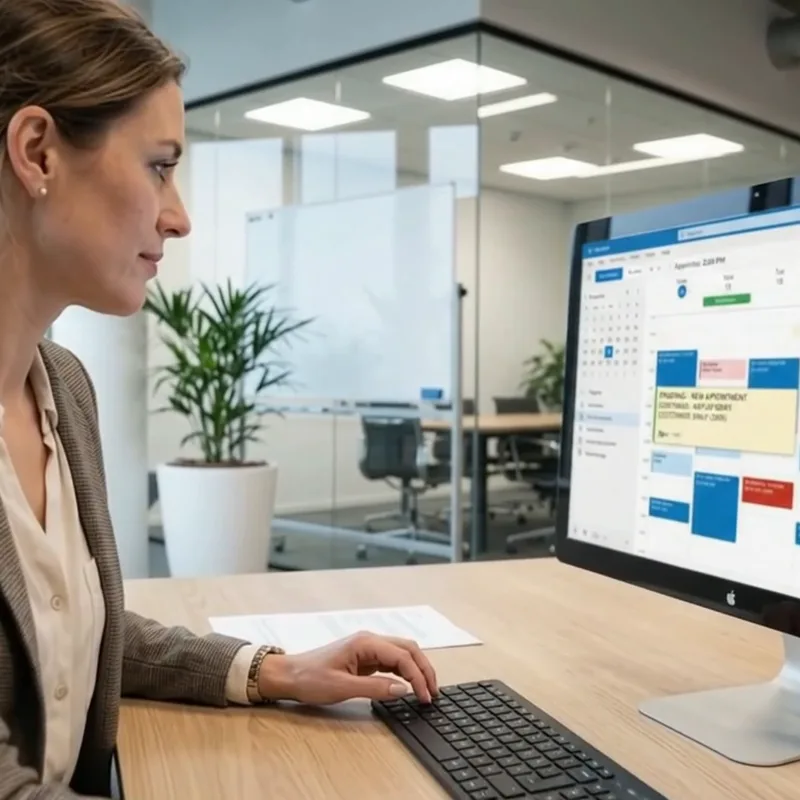
Getting three people into one meeting, when one of them lives in another time zone, is a small nightmare. Ten messages later you have a time, and then someone cancels.
A scheduling tool can look at everyone's calendar, offer a few slots and send the reminder. You pick one. That's it. It sounds minor until you count how many of these you do in a week.
The shelf that doesn't match the sheet
If you have ever run a shop or looked after a stockroom, you know the feeling of counting the same boxes twice. The sheet says forty. The shelf says thirty-six. Nobody knows where four went.
When a scanner feeds straight into a system that updates the count and warns you when something is running low, those moments get rarer. You still walk the shelves now and then. You just stop doing it in a panic.
The same ten questions
Customers tend to ask the same things in slightly different words. What time do you open? Has my order shipped? How long will delivery take?
An assistant can answer these at any hour, even at ten at night, and pass the unusual ones to a real person. The customer doesn't wait until morning, and your team stops typing "your parcel is on its way" for the fortieth time that week.
Numbers nobody wants to read
A month of figures in a spreadsheet is good at one thing: storing numbers. It's bad at telling you what happened. AI can read through it and say, in plain sentences, that sales dipped in the second week and one product carried the month.
Treat that summary as a starting point and check the numbers yourself before you quote them to anyone.
And then there's home
This isn't only about offices. Plenty of people use AI at home without making a fuss about it. Planning a week of dinners from whatever is already in the fridge. Working out a fair way to split the costs of a family trip. Explaining a school topic to a child in simpler words. Making sense of a message from a supplier or a relative who writes in another language. Finding the right words for that message you've been putting off for three days.
None of this is impressive. All of it is useful, and that's the point.
If you're just starting
Choose the one task you dislike most. Not the most important one, the most annoying one. Notice how long it takes you for a week, then try handing the first draft of it to AI and compare.
Two small rules help. Don't give it anything you wouldn't be comfortable showing a stranger, such as passwords, private customer details or bank information. And always read what it gives back. It is confident even when it's wrong.
Where it still falls short
It doesn't know your customers the way you do. It can't read the tension in a room, and it won't know that a particular client prefers a phone call to an email. Anything involving trust, a delicate conversation or a real decision still belongs to a person.
Think of AI as a quick, slightly forgetful assistant. Very good at the groundwork. Not the one who should have the final say.